
Know the Facts
Lake or Estuary?
- There is no easy, cost-free solution
- Either option will require millions of dollars in future years
- There is NO historical salmon run
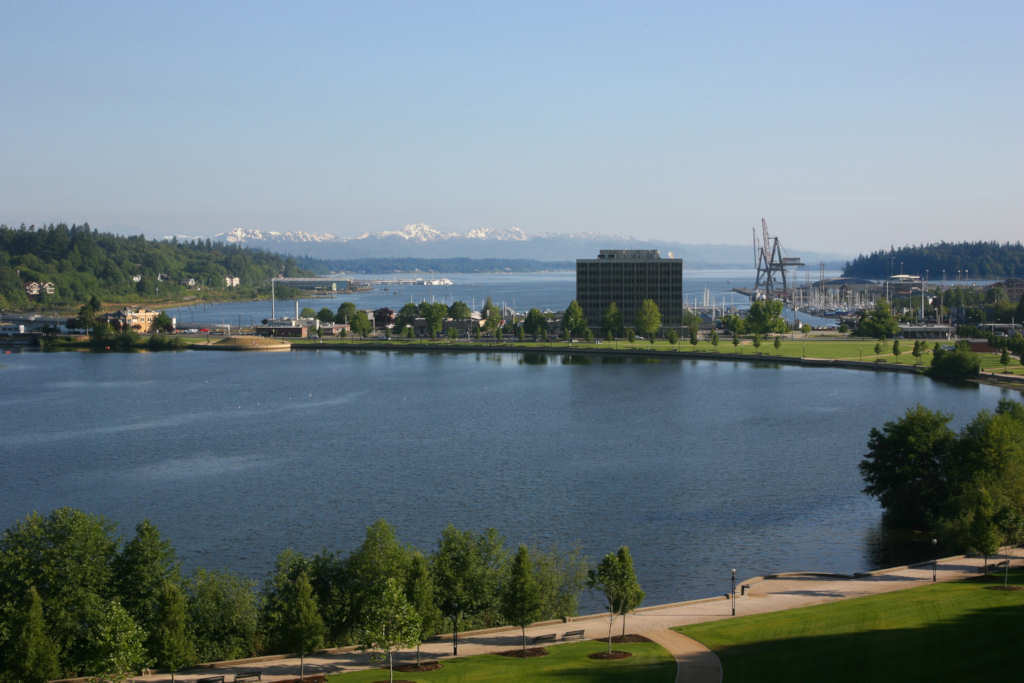
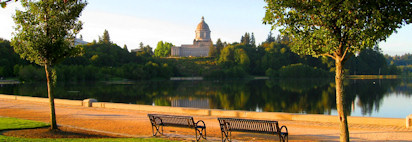
The effects of the CLAMP study’s recommended plan are irreversible. It has the potential of destroying the design of the Capitol Campus, and of seriously undermining the aesthetic appeal and viability of the Olympia waterfront and the economic and social vitality of Olympia's city center.
Once you take out the dam and remove 500 feet of the Fifth avenue bridge and roadway to open it up, there will never again be a Lake. This would be the result of the CLAMP recommendation.
In contrast, the CLIPA plan provides an option for the future. Once we clean up the lake, we would still have the option to again let it fill in and be converted to an estuary.
Removing the dam hurts our waterfront
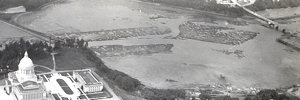
There are approximately 900,000 cubic yards of sediment in Capitol Lake today. That is enough dirt to fill 90,000 standard dump trucks.
If Capitol Lake Dam is removed, most of this sediment, plus the annual Deschutes River sediment load of 35,000 cubis yards, will be flushed into the Percival Landing and city waterfront areas of Budd Bay. This is a total of more than 100,000 cubic yards of sediment that will be dumped into Olympia's waterfront every three years.
If we stop dredging the lake and allow this sediment to be dumped into our waterfront the accumulated sediment will:
- Eliminate venues for the Wooden Boat festival, Harbor Days, the Lighted Ships Parade
- Negatively impact community events such as Lakefair
- Destroy scenic waterfront for numerous restaurants and businesses
- Eliminate recreational boating moorage along the waterfront
- Revert the lake area to stinky mud flats
- Undo 25 years of work and money spent building Percival Landing into a public attraction
Removing the dam hurts our economy
Removing the dam to create an estuary would be expensive. The 5th Avenue Bridge would have to be replaced. Deschutes Parkway and the new 4th Avenue Bridge would have to be reinforced to withstand the flow of the tides. These initial construction costs would range between $67 million and $90 million.
In addition to these construction costs, dredging would still need to be done to keep the current water depth throughout the Percival Landing area and city waterfront
This continued dredging would also be expensive: $48 million to $112 million over the long term. The City of Olympia and five marinas located along the waterfront would be confronted with a three-year dredge cycle, with costs averaging $3 million per cycle. It is questionable whether the marinas could continue operating with these costs.
The estimated loss of 450 recreational boat moorages would deprive the local economy of more that $10 million per year. This is just a small part of the total social and economic impacts of removing the dam.
Lake or Estuary, know the facts about Capitol Lake
by: CLIPA Capitol Lake Improvement & Protection Assn. - March 2010The CLAMP study’s recommended plan has the potential of seriously undermining the aesthetic appeal and viability of the Olympia waterfront and the economic and social vitality of Olympia's city center.